
November is Mouth Cancer Action Month, so we're providing information on detecting, treating, and diagnosing mouth cancer. Although it's very treatable during its early stages, mouth cancer is the third fastest-growing cancer in the U.S. This is particularly unfortunate because when detected and treated early, mouth cancer has an excellent cure rate, and the treatment isn't very invasive. When it progresses, however, the treatment can be very invasive and extensive. For this reason, we recommend that everyone who is at least 18 gets screened for oral cancer. Your dentist can screen you during your annual exam. The screening isn't painful, and it's not invasive. Since it doesn't take long, it won't add to the time you spend in the dentist's chair.
Mouth cancer is any cancer that affects part of the mouth, such as the lips, cheeks, tongue, salivary glands, or gums. It usually presents without symptoms, so we recommend that everyone get screened for oral cancer. By the time an individual notices symptoms, the cancer will have spread. However, if you notice any of the following, then call our office immediately:
The presence of any of the above doesn't confirm that you have oral cancer, but they signal a problem that should be investigated. It's always better to have something checked by your dentist when it wasn't necessary than not to check it when you should have.
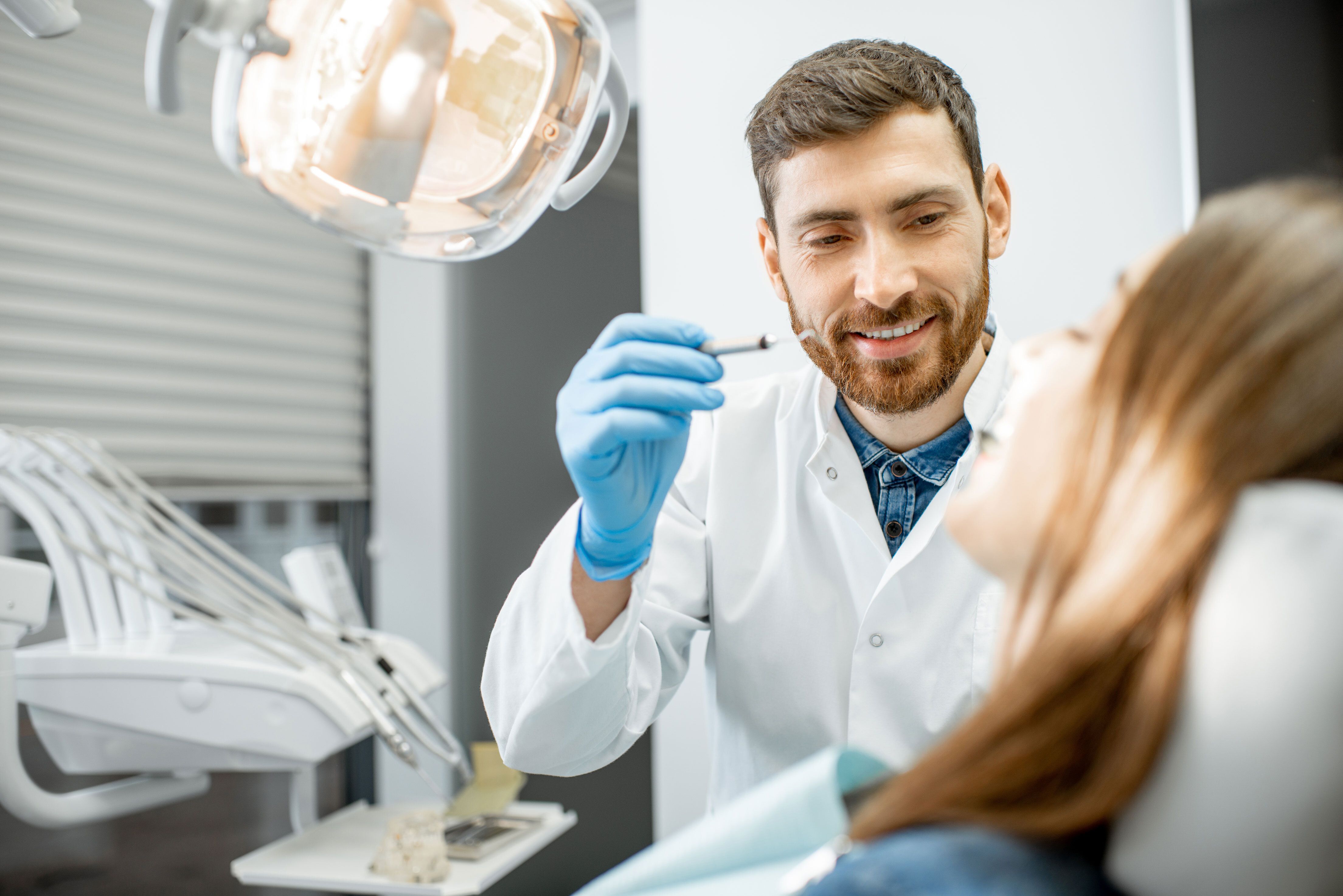
During your appointment, your dentist will palpate the soft tissues in your mouth, such as your lips, cheeks, tongue, and salivary glands, to determine if there are any abnormalities. Occasionally, they may also check the neck and head. If necessary, they may order additional diagnostic tests or a biopsy.
There's no standardized treatment for mouth cancer because each patient is unique. The treatment will depend on the overall health of the patient, the type and location of the cancer, and whether it has metastasized or remained localized. However, the earlier mouth cancer is detected and treated, the better the prognosis, so if you haven't scheduled an oral cancer screening, call our Chesapeake, VA office for an appointment.
Depending on the status of the oral cancer, treatment options can be as simple as removing the cancerous area or as complex as rounds of chemotherapy and radiation with reconstructive surgery. Your treatment team will consist of your general dentist, an oncologist, and possibly a maxillofacial oral surgeon, depending on the complexity of your treatment. Your treatment team will discuss your options with you and recommend the best one. Newer treatment options include targeted therapy, which uses medicines to identify and treat only the cancer cells. Targeted therapy isn't available for all types of cancers, however.
Usually, there isn't a genetic factor unless you have a first-degree relative – a parent, child, or sibling – who has it or had it. Sometimes, there's no discernible cause. Usually, mouth cancer occurs due to lifestyle habits or some factors that are beyond your control, such as your age or birth gender. For example, biological males are more likely to develop mouth cancer than biological females, and those who are 45 or older are more likely to develop oral cancer. The best deterrent is regular dental checkups and an oral cancer screening at intervals your dentist recommends.
Other factors that elevate your risk of developing oral cancer include abusing alcohol, which is defined as having 21 or more alcoholic beverages in a week or three or more daily. Alcohol irritates your mouth membranes and causes them to absorb more toxins from substances such as tobacco. The bloodstream then carries the toxins throughout the body, where they can cause other cancers and illnesses to develop.
Using any type of tobacco product exponentially increases your likelihood of developing mouth cancer, and it doesn't matter whether you vape, chew, dip, use a pipe, or smoke cigarettes. If you drink and smoke heavily, you have a sixfold increased risk of developing mouth cancer. This means that, in all likelihood, you'll get some form of mouth cancer if you smoke heavily and drink to excess.
A poor diet – one that lacks fruits, vegetables, and omega-3s – also elevates your risk factor for developing mouth cancer, as does engaging in risky behaviors. Spending a substantial amount of time in the sun without sun protection can increase your propensity to develop mouth cancer.
Not all risk factors, such as age and gender, can be changed, but many can, such as the following:
Change the factors you can, and don't worry about the others because stress can be bad for your health.
If you haven't been screened for oral cancer, then Mouth Cancer Action Month is an ideal time to rectify that. If you need your annual exam and cleaning, we can schedule them simultaneously. Call Konikoff Dental Associates at for an appointment, and we'll help you get both your mouth and your body in better shape for Mouth Cancer Action Month.
We're among the best in the area for our customer service and dental expertise, and we're sure you'll be happy with our team.
Call us today. You'll be glad you did.